
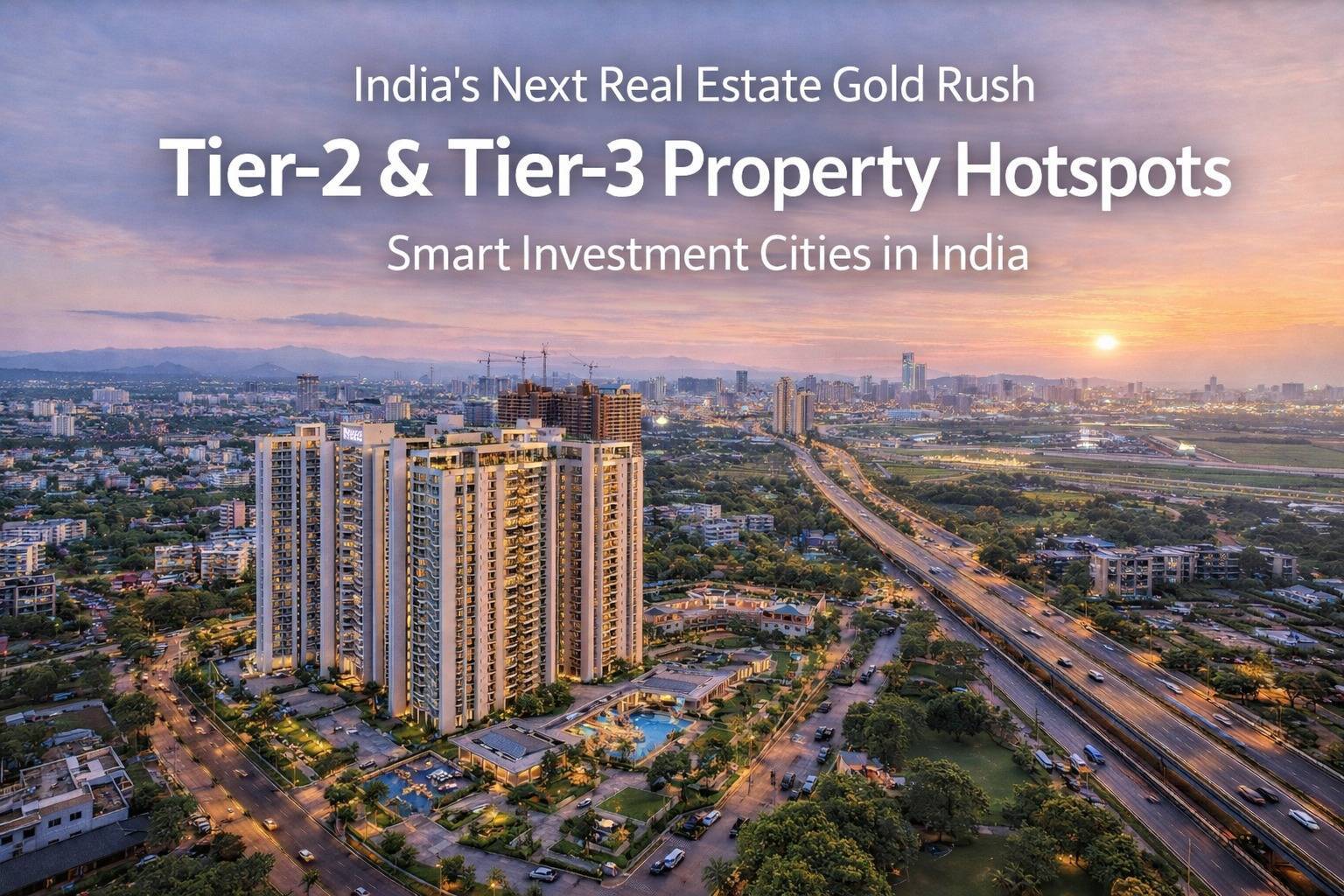
Why Tier-2 & Tier-3 Cities Are Becoming Real Estate Investment Destinations
For decades, real estate investment in India was concentrated in major metropolitan cities such as Delhi, Mumbai, Bengaluru and Chennai. However, over the last few years, investors have started exploring opportunities beyond these saturated markets.
Tier-2 and Tier-3 cities are now emerging as promising real estate destinations because of rapid infrastructure development, improved connectivity, and increasing job opportunities. Property prices in these cities remain significantly lower than metro markets, making them attractive for both first-time buyers and long-term investors.
Many investors today believe that the next major real estate growth wave in India will come from these developing urban centers.
What Are Tier-2 and Tier-3 Cities?
Cities in India are often categorized based on population size, economic activity, and infrastructure.
Tier-2 cities are mid-sized urban centers with growing infrastructure and commercial development. Examples include:
Indore
Jaipur
Lucknow
Chandigarh region
Coimbatore
Nagpur
Tier-3 cities are smaller towns that are gradually developing into regional economic hubs.
These cities typically offer:
lower property prices
less congestion
strong future development potential
As infrastructure improves, many Tier-3 cities eventually evolve into Tier-2 investment destinations.
Key Reasons Investors Are Looking Beyond Metro Cities
1. Affordable Entry Prices
In metro cities, residential property prices can easily exceed ₹1.5–₹3 crore. In contrast, Tier-2 cities still offer good properties within the ₹40 lakh–₹1 crore range.
This affordability allows investors to enter the real estate market with lower capital while still benefiting from future price appreciation.
2. Infrastructure Development
Government infrastructure projects are transforming many emerging cities.
Major developments include:
new airports
expressways and highway expansion
metro rail projects
industrial corridors
Infrastructure directly impacts real estate demand because improved connectivity attracts businesses, jobs, and population growth.
3. Industrial and IT Growth
Several companies are expanding their operations into smaller cities to reduce operational costs. This shift is creating employment opportunities outside major metropolitan areas.
When jobs move into a city, housing demand naturally increases.
This trend is already visible in cities like Indore, Jaipur and the Chandigarh-Mohali region.
4. Growing Demand for Affordable Housing
A large segment of homebuyers in India belongs to the middle-income group. Tier-2 cities offer larger homes and better lifestyle options at comparatively affordable prices.
Developers are also focusing on residential townships, plotted developments, and mid-segment apartments in these markets.
Emerging Real Estate Hotspots in India
Several Tier-2 cities are currently attracting investor interest due to rapid development.
Indore
Indore has consistently ranked among India's cleanest cities and has strong industrial growth. Infrastructure improvements and commercial expansion are driving residential demand.
Jaipur
Jaipur has become a major tourism and business hub. The city's connectivity with Delhi through highways and rail networks has boosted real estate demand.
Lucknow
Lucknow is witnessing infrastructure upgrades, including expressways and airport expansion. These developments are encouraging both residential and commercial real estate growth.
Chandigarh Region (Tricity)
The Chandigarh, Mohali, and Panchkula region continues to attract investors because of its planned infrastructure and high quality of life.
Areas around Mohali and Zirakpur have seen increasing residential demand in recent years due to improved connectivity and proximity to the airport.
Plots vs Apartments: Which Investment Works Better?
Investors in emerging markets often choose between plots and apartments.
| Investment Type | Advantage |
|---|---|
| Plots | Higher appreciation potential |
| Apartments | Immediate rental income |
| Township projects | Balanced investment |
| Commercial property | Higher returns but higher risk |
Many investors prefer plots in developing areas because land values tend to appreciate significantly as infrastructure grows.
Things Investors Should Check Before Buying Property
Before investing in any city, it is important to evaluate several factors.
Key considerations include:
legal approvals and property documentation
connectivity and transportation infrastructure
upcoming government projects
developer reputation
long-term city growth potential
Conducting proper research helps reduce risks and improves the chances of long-term returns.
Future Outlook for Real Estate in Emerging Cities
The shift toward Tier-2 and Tier-3 cities is expected to continue over the next decade.
As infrastructure improves and industries expand into new regions, these cities will likely attract more residents and investors.
Many experts believe that the next phase of India's real estate growth will be driven by these emerging urban markets rather than traditional metropolitan cities.
Final Thoughts
Tier-2 and Tier-3 cities represent a significant opportunity for investors who are looking for long-term property growth.
Lower entry prices, improving infrastructure, and increasing economic activity are creating favorable conditions for real estate investment in these markets.
For investors willing to research emerging cities and adopt a long-term perspective, these markets could offer strong appreciation potential in the coming years.